

the foundation still stands
not a Botox hit piece, but almost

Last month I tuned into the livestream of a fairly popular Christian women’s conference. I’d guess there were maybe a thousand or so in attendance live at the main site, with thousands more like me tuning in online.
Ten minutes into the start of the stream, I sent my friend this text about one of the main speakers:
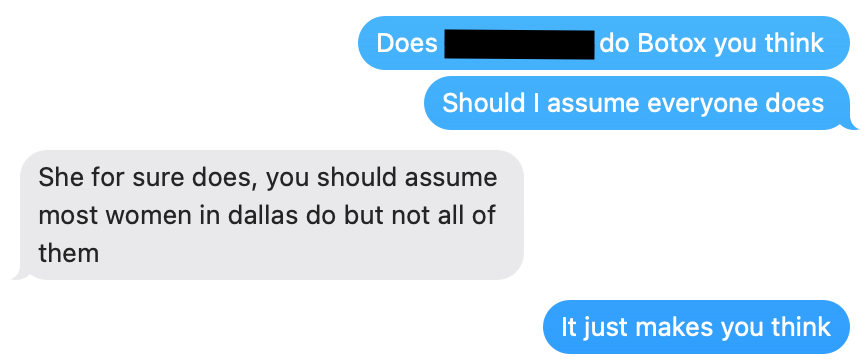
I’m not trying to rag on this one specific woman. Many of you on here are far outside my DFW-Protestant-Christian-bubble, and it’s likely you have no idea who she is. I truly do believe that she loves the Lord, and he has used her life in beautiful ways: she’s written books that point to Jesus, boldly spread the gospel far and wide, and now she was at this event, talking about how we can walk in freedom instead of believing the lies of the enemy.
But as I stared at her smooth face on the screen, all I could think was, “why should I believe you?”
It is hard to take the encouragement to rest in God’s promises seriously when it’s coming from the mouth of someone unable to rest in the skin God has given her.
It is hard to build the faith that allows God to change my heart when I cannot trust him with my changing body.
As I texted my friend, it does make me think.
What does it literally look like to trust? And what does it look like to not?

I know myself—I love a debate and a strongly worded essay, and I’d have a ball writing a Botox hit piece, it’s true.
I know many of my friends on here agree that cosmetically altering ourselves to fit some “beauty ideal” is not a meaningless choice, but a decision to reject the very body that God has formed, knit, woven, given to us.1 “Wonderful are your works,” we’ll say one moment, but our souls are quick to forget, and next thing you know, we’re trading a matchless work of the Creator for a work of men’s hands.2
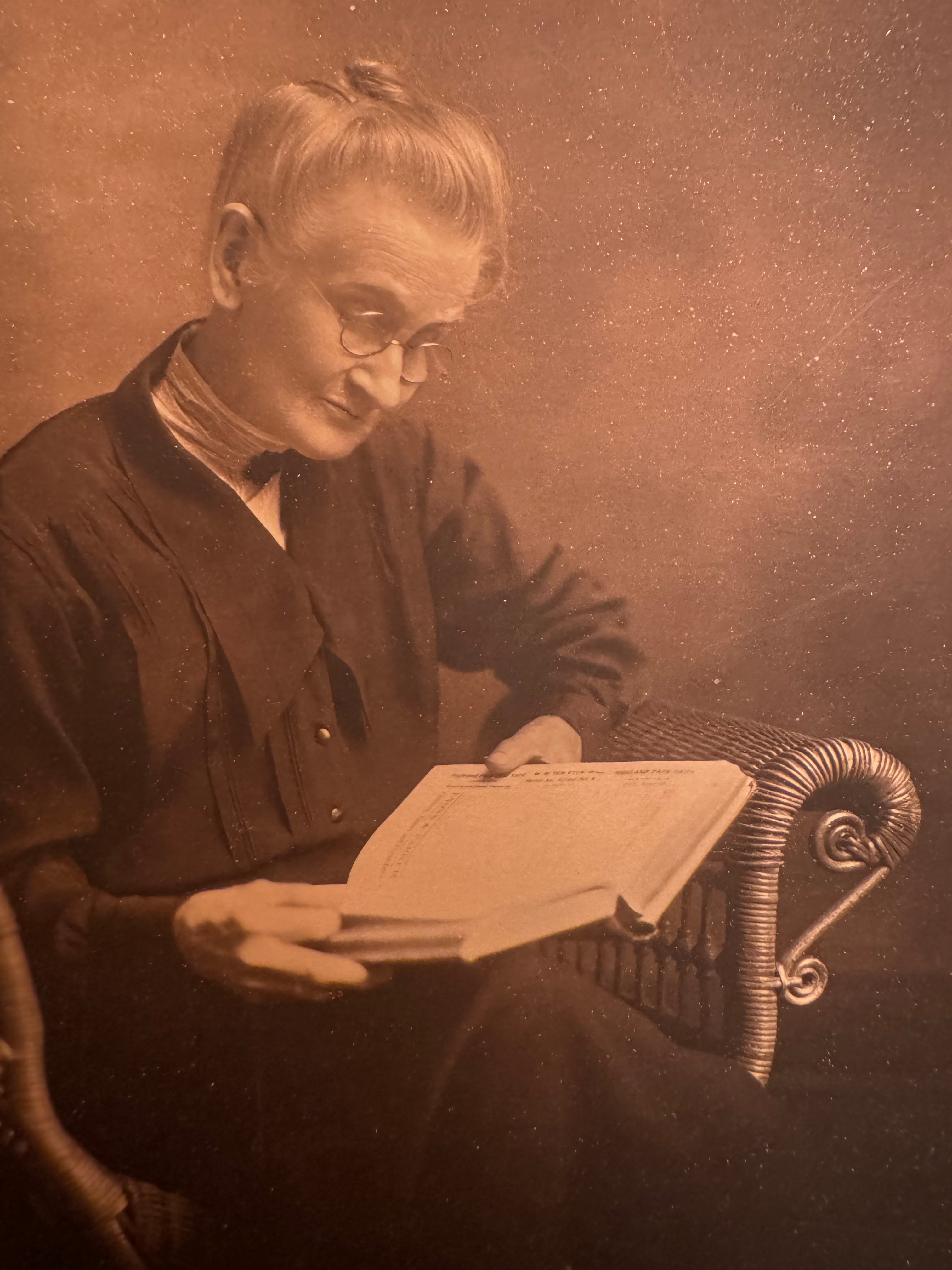
So, yes, I could say a lot. Aging is a gift. Our bodies matter to God. Botox=bad. What message are you sending to your daughters? Jesus will do more for your self-worth than any cosmetic procedure. Yadda yadda yadda. With my persuasive essay and y’all’s agreeable comments, we’d definitely get ‘em this time. We wrinkled women are very cool and wise and mature and frankly, holy.
And yet, if we’re pinpointing the problem as a lack of trust, as the absence of acceptance in what God has given, as a desire take control and push pause (or rewind or change channel) on the life that the Author is writing for us, as an attempt to escape pain, then the pointed finger at the silly Botox women quickly turns back to me.
When have I wished that I could change or reverse or undo not the marks on my skin, but other threads that the same good God has seen fit to knit into my story? When have I thought, I know better than God?
There are hundreds of things that I can look back on, stretching across the years. Smaller things, from my younger days: why did those friends leave me out, why did I not get accepted into that club or program? There are many things I would have done differently if I were in charge. If someone offered me a shot in the forehead that would soothe and smooth those situations, would I have taken it? Probably.
But each disappointment left me with the opportunity to look around and realize that the truths are still true: God is still here. He is still good. I am still loved. The foundation still stands.
“Practice losing farther, losing faster,” wrote the poet Elizabeth Bishop.3 And I did—the stories I wouldn’t write for myself got worse. I took to my journal as an 18 year old, titling a page Bible Verses that Sound like B.S. When Your Mom Dies of Cancer.
They did sound like B.S. They did not feel true. But in the quietest place, after the accusing petered out and the tears dried up, I could still hear the song, ever faint. Even then, the truths were still true. God is still here. He is still good. I am still loved. The foundation was still holding me.
In the twelve years since I titled that journal page, many similar sentiments have been scrawled out.4 What are you doing? You say you are wise and just and merciful, but this situation is so hard. Help me to see it. Help me to trust you. Help me to feel my feet held up by the foundation of who you are: good, loving, near.
The world will offer us many shiny escape-hatches out of suffering big and small.
“Don’t like your face?” a neon sign flashes, “Come over here and try this chemical! You’ll finally love yourself.”
“Feeling lonely? Real relationships are hard. People are messy. Live your life online instead!”
“Mom’s dying? God must’ve got a little distracted. You deserve some distractions too! Come browse our menu of pain-numbing fare! He let you down, you can let him down a little too!”
But there is a catch: any attempt to climb out of my pain requires stepping off the foundation. And eventually, whatever I sought to soothe or save me will send me crashing back down. As I’ve quoted before, “the very things in which people attempt to find liberation frequently become the things that bring them harsher bondage.”5
I know that, in his mercy, I could never climb far enough where he wouldn’t be ready to catch me, to welcome me back with gentleness. But the fall hurts less when you never leave the foundation.
The skyrocketing popularity of Botox and cosmetic procedures is a collective action problem—one person opting out doesn’t make much difference on what’s normalized at the societal level. But cultural beauty norms can change when more and more women push back.
I’m a hopeful gal. I believe we can change the perspective on what is truly beautiful, and I believe we can change the perspective on pain, on discomfort, on the suffering that comes for us all in various times and ways. As believers, we live in a better, more satisfying story. We can see the emptiness and fleetingness of the escape-hatch promises of the world. When storms come, we have an unshakeable foundation to stand on.
What if we encouraged each other not only to appreciate our aging faces and to see beauty and blessing and meaning in our wrinkles, but to appreciate—or at least not rage against—our hard circumstances? It is right to grieve and wrestle and lament when things are not as they should be. And it is right to remind one another that through Christ, our pain is never purposeless, and that God is with us in all our questions and longings.
What if, right now, you took a deep breath and let these words from Isaiah 46 pour over you:
“Listen to me, O house of Jacob, all the remnant of the house of Israel, who have been borne by me from before your birth, carried from the womb; even to your old age I am he, and to gray hairs I will carry you. I have made, and I will bear; I will carry and will save.”
From before my birth, to my gray hair (and wrinkles!), the truth remains: God is still here. He is still good. I am still loved. The foundation still stands.
I have scraped my way out of his arms and been thrust back into them over and again. With each passing year I am learning a new tactic: resting. Accepting what comes from his hand. Trusting his goodness. Allowing myself to be carried.
What else can I do? Where else would I go?
Psalm 139. Yes, it can get a bad “this is a classic women’s fluff verse” rap, but I mean, come on, it’s powerful stuff that actually, as Jen Wilkin says, points less to a wonderfully-made me and more to a wonderful God.
In 2 Chronicles 32, Sennacherib king of Assyria (a bad guy) and his servants blasphemed God when they, among other things “spoke of the God of Jerusalem as they spoke of the gods of the peoples of the earth, which are the work of men’s hands.” I ain’t saying it’s blasphemy, but swapping the works of the God (your face) for the work of men’s hands (a cosmetically-altered face) feels like an unwise and un-honoring thing to do. But that’s just me!
https://www.poetryfoundation.org/poems/47536/one-art
Wrote a whole thing about it last year:


(The specific quote is from G.K. Beale, Redemptive Reversals and Ironic Overturning of Human Wisdom, pg. 27).
This is one reason I love Lisa Bevere. She’s spoken on this topic multiple times and openly rejects altering herself as she ages! Such a great way to steward influence. And - great piece!
A vague hit piece on Botox turned deeply introspective meditation on the meaning of Christian suffering was not on my bingo card for today, but boy howdy was this a wonderful read.
I am put in mind of a particular Bible verse which captures this idea of leaving the foundation:
“Even if you were to soar high like an eagle, even if you were to make your nest among the stars, I can bring you down even from there!” says the Lord.” - Obadiah 1:4